What's Missing W/ Steve Moutria Mary and Baby
Mary Anning: Life and discoveries of the first female paleontologist
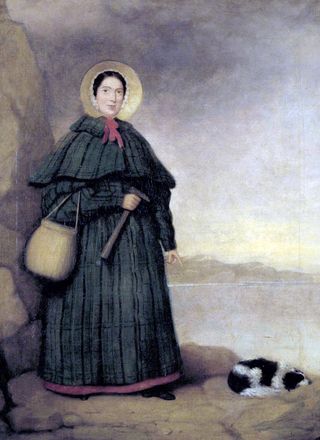
Mary Anning was an impoverished, self-taught fossil hunter whose remarkable discoveries paved the style for modernistic paleontology. Through her carefully documented finds, she expanded homo knowledge of ancient life, although until recently her work was overlooked or dismissed due to her gender and social status.
Early years
Mary Anning was born in 1799 in the seaside resort town of Lyme Regis, England. The boondocks, which billed itself as a budget alternative to resorts such as Bath, had one other feature going for it: its coastline.
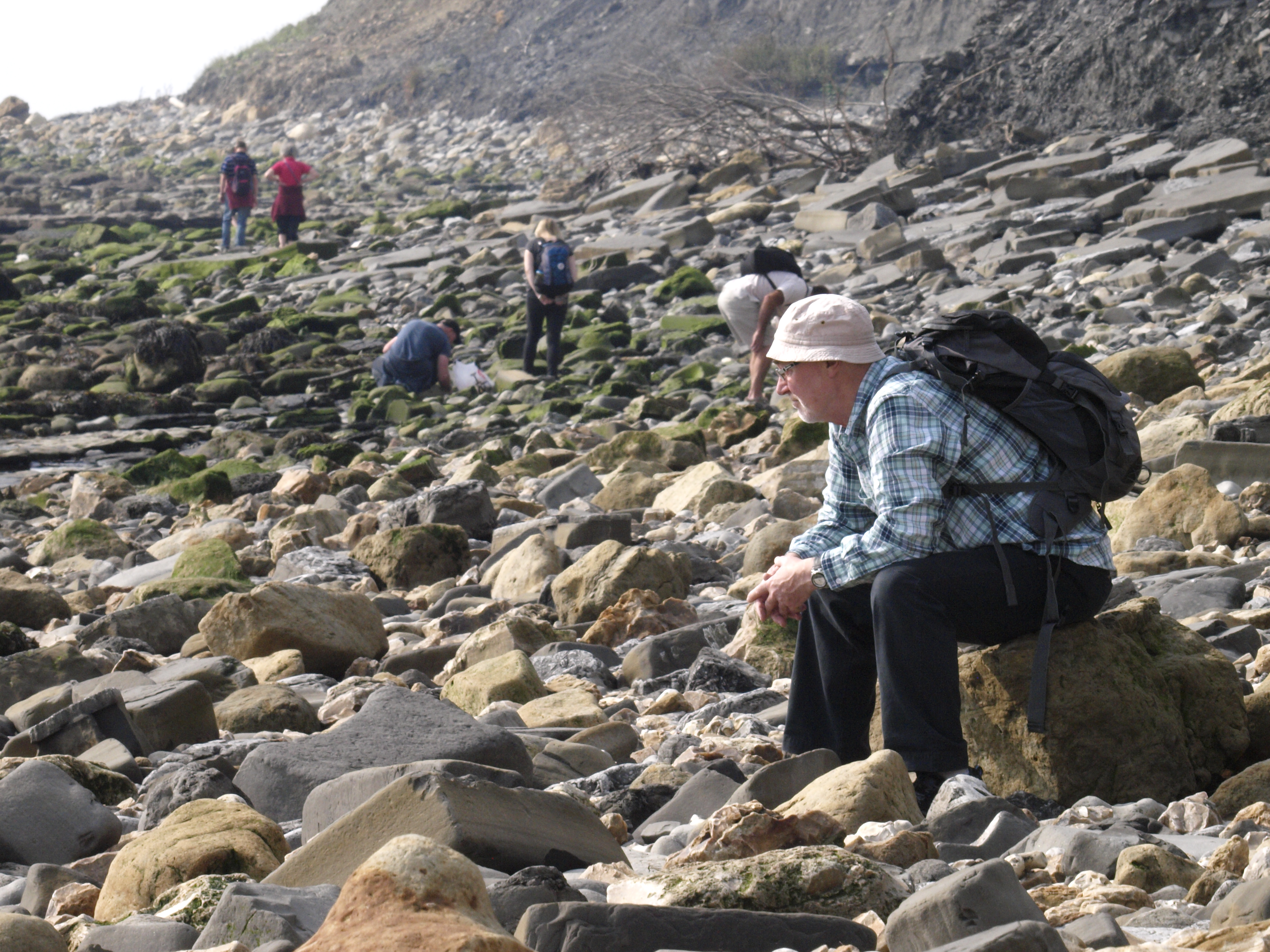
Around 200 meg years ago, during the Jurassic menstruum, that coastline was covered in a warm sea teeming with prehistoric life, Hakai mag reports. That sea eventually receded, but the soft sedimentary rocks that formed the seabed remained, and the remains of animals that had been cached in the seabed slowly became rock themselves. Function of the seabed eroded away, forming cliffs; every moving ridge or ferocious storm eroded those cliffs, exposing a cornucopia of fossils.
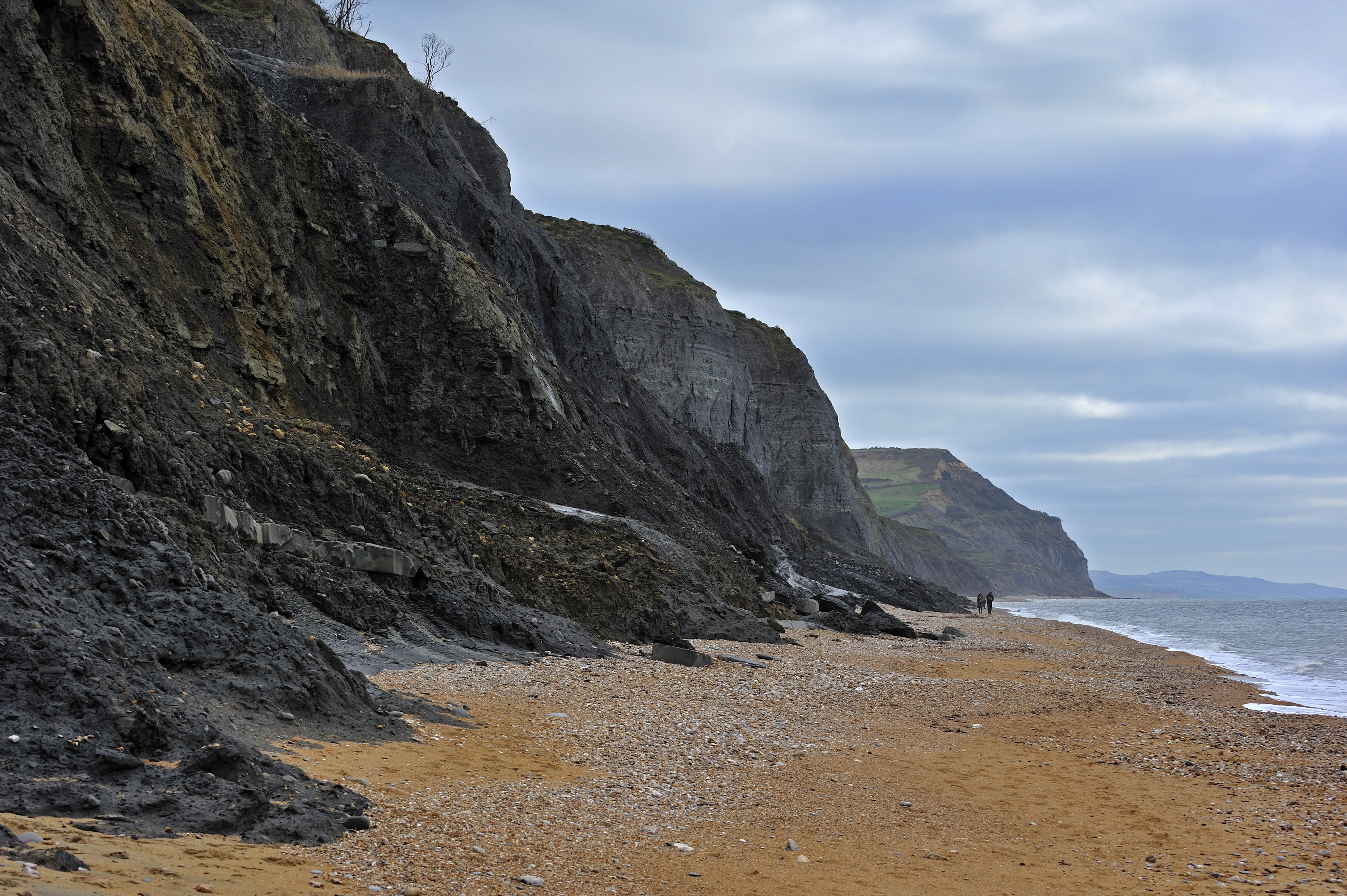
It's unlikely Anning's parents, Richard and Molly Anning, knew any of this when they moved to Lyme Regis. Co-ordinate to Mary Anning biographer Shelley Emling, Richard, a cabinetmaker, chose Lyme Regis for its potential to concenter wealthy tourists wanting to take in the sea air. Merely he quickly became a beachcomber, selling small-scale fossils to those tourists who wanted a gift of their vacations. By the time Anning was 6, she was a regular presence past her father's side, helping him find, excavate and clean fossils.
Tragically, Richard died on Nov. 5, 1810. Emling, who wrote "The Fossil Hunter: Dinosaurs, Evolution, and the Adult female Whose Discoveries Inverse the World," (St. Martin's Press, 2009) says most experts believe his decease resulted from a combination of tuberculosis and a fall off the unsafe Lyme Regis cliffs. His death left Molly a widowed mother of two, pregnant with a third child and destitute. To brand matters worse, the Annings were "Dissenters," or Protestants that didn't follow the Anglican Church. Their religious practices encouraged Anning to learn to read, but did not necessarily aid her status amid her neighbors.
Read more: 20 astonishing women in science and math
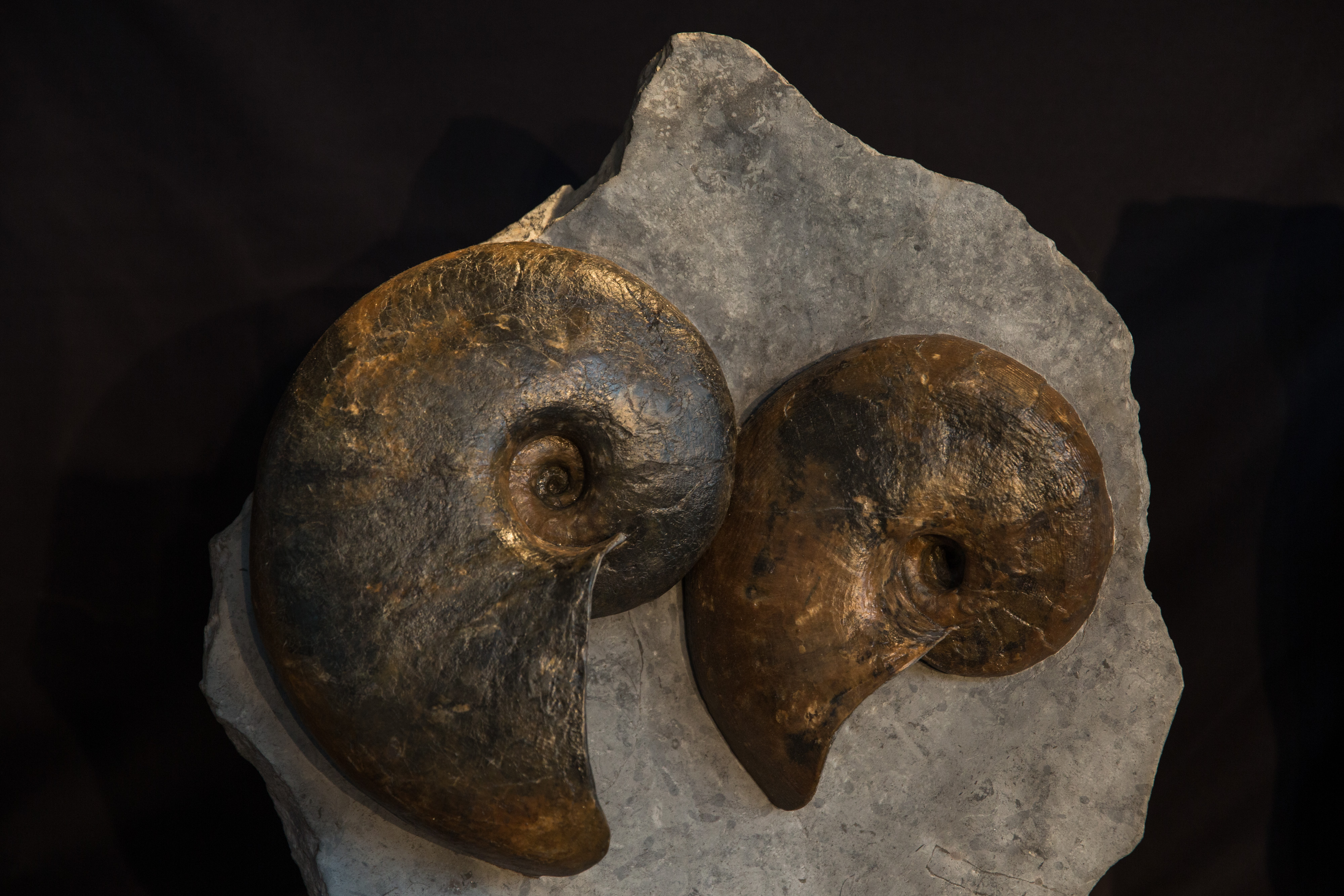
It's not clear, according to Emling, what prompted Anning to go back to the beaches after her father's decease. Mayhap she was intrigued past the fossils, or possibly she just missed days hunting for treasures with her father. Other historians, including Hugh Torrens, who studies the history of paleontology in Uk, suggest that in fact Anning's mother continued the fossil business later Richard'south expiry. Either style, Emling writes, a few months afterward Richard's death, Mary Anning uncovered a large ammonite. A woman, probably a tourist, bought it from her for half a crown, more anyone had always paid Richard for a fossil. Once Anning realized she could earn money for her family unit through fossil hunting, she went to the beach regularly.
First discoveries
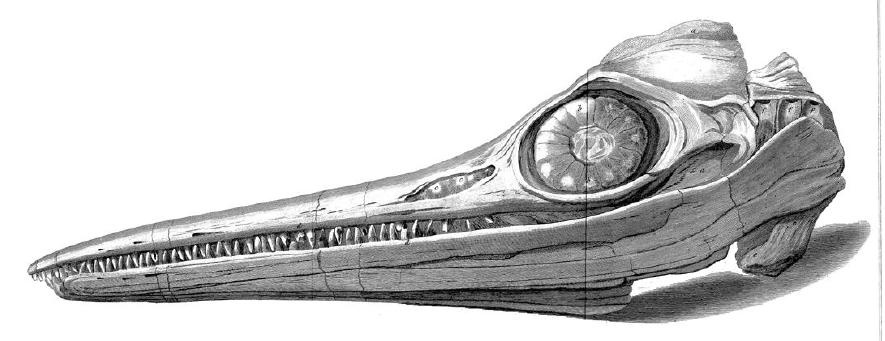
Less than a year later, Anning, with the help of her brother, uncovered a fossil that baffled scientists. It was 17 feet (5.ii meters) long, had 60 vertebrae, and took months to excavate, and by the time the Annings were done, word had spread in town that she had discovered a monster. Function of it looked like a fish, but part looked like a crocodile — something like this had never been seen earlier, or at least not past the London scientific institution. It would ultimately exist named ichthyosaur, pregnant fish-lizard. Ichthyosaur fossils had been found earlier, but Anning's specimen was the first complete skeleton, and it threw the scientific world into turmoil.
"I by no means consider it as wholly a fish, when compared with other fishes, but rather view it in a similar light to those animals met with in New South Wales, which announced to be so many deviations from ordinary structure," Sir Everard Home, a British surgeon, wrote when first describing the fossil in an 1814 scientific journal. He didn't mention Anning, instead noting the proper name of the landowner whose estate contained the cliff face up.
As Emling writes, many scientists and then still believed in the Genesis theory of creation, which didn't allow for evolution or extinction. (Charles Darwin's groundbreaking book, "On the Origin of Species" wouldn't be published for another 48 years.)
Anning had no interest in the academic excitement effectually her fossil discovery. She knew, however, that she had found something boggling in the ichthyosaur fossil; she sold it to a rich collector for £23. At the time, that sum was enough to feed her family for six months, Emling says. That collector donated the specimen to a individual museum; it eventually made its way to the British Museum and finally the Natural History Museum in London where today, only the skull remains.
Read more: The discovery of a gigantic plesiosaur in Antarctica
Anning connected fossil hunting throughout her teenage years. Between 1815 and 1819, Emling writes, she found "several" more complete ichthyosaur skeletons, many of which ended up in local museums or making the rounds on a lecture circuit. Almost unfailingly, the men who lectured about their theories of ichthyosaur anatomy or origin neglected to mention the woman who found, extracted and cleaned the fossils that were making the men so famous.
Anning's next major find was fifty-fifty more controversial than her first ichthyosaur: In 1823, co-ordinate to a biography published past the U.k.'southward Natural History Museum, she discovered the complete skeleton of a plesiosaurus, a 4-limbed extinct marine reptile. Just a few years afterward, in 1828, she besides discovered the first pterosaur, a winged reptile that lived during the dinosaur historic period, to be found outside Germany. In her lifetime, she would go along to discover multiple species of extinct fish as well as a number of other sea creatures. She, along with English language paleontologist William Buckland, also pioneered the study of coprolites — fossilized feces.
Scientific recognition at last?
The scientific establishment, which was exclusively male, was slow to recognize Anning's accomplishments. During Anning'southward lifetime, one of the highest written praises of her was by a woman, Lady Harriet Silvester, a wealthy widow who lived in London, who visited Anning in 1824:
Information technology is certainly a wonderful case of divine favour — that this poor, ignorant girl should be so blessed, for past reading and application she has arrived to that caste of cognition as to be in the habit of writing and talking with professors and other clever men on the field of study, and they all acknowledge that she understands more than of the science than anyone else in this kingdom.
It wasn't only her gender, merely her lack of formal teaching, her stiff land accent and her poverty that made her easy for academia to ignore. Furthermore, writes Torrens, information technology was simply more common at the time to record information about the wealthy person who donated a fossil to a museum — fossil hunters in general but weren't people the scientific establishment cared almost.
Bank check out images of researchers unearthing a huge pliosaur in Svalbard, Norway.
Anning did receive some recognition as a fossil hunter, but the testify points to her having more knowledge than locating and preparing aboriginal remains. Co-ordinate to Christopher McGowan's book "The Dragon Seekers: How an Extraordinary Circle of Fossilists Discovered the Dinosaurs and Paved the Manner for Darwin," (Basic Books, 2001) she read as much scientific literature as she could borrow, and oftentimes painstakingly copied the papers out past hand and then she could keep copies herself. She as well oftentimes copied the original drawings. McGowan, a zoologist and vertebrate paleontologist, writes of one paper: "I am difficult-pressed to distinguish the original from the copy."
Anning died of breast cancer at age 47 in 1847. The Quarterly Journal of the Geological Society of London published her obituary; it was the first time they had honored anyone who was not a fellow member of the society with such. According to Torrens, the society wouldn't even acknowledge women until 1904 — 57 years later.
Legacy and myths
For a while, considering of the lack of recognition paid to Mary Anning by male person scientists, Anning was nearly forgotten. But her name is making a comeback. The Lyme Regis Museum, congenital on the site of Mary Anning's fossil shop, inaugurated a Mary Anning wing in 2017. Two biographies of Anning — Emling'due south book cited here, and P.Yard. Pierce'south "Jurassic Mary" (Sutton Publishing Ltd, 2006) — inside roughly the last decade have introduced more than readers to her life. In that location are besides several historical fiction accounts of her life, including "Remarkable Creatures" (Dutton Adult, 2010), and children'due south books, such as "Dinosaur Lady: The Daring Discoveries of Mary Anning, the First Paleontologist" (Sourcebooks Explore, 2020) and "Stone Daughter Os Girl: The Story of Mary Anning of Lyme Regis" (Scholastic, 1999).
A feature-length biopic released in 2020, starring Kate Winslet and Saoirse Ronan, means that more than people will know Anning's name, if not her accomplishments. In a review in Newsday, critic Rafer Guzmán called the pic, which focuses on a romance between Anning and another young adult female, geologist Charlotte Murchison, "well-acted erotica, but historically dubious." There is in fact no evidence that Anning was attracted to women. She never married, just in at to the lowest degree one letter, it was Murchinson'due south married man who Anning found attractive; she called him "certainly the handsomest slice of flesh and blood I ever saw."
An often-repeated myth about Anning is that she inspired the tongue-twister "she sells seashells by the seashore." According to folklorist Stephen Winick, writing for the Library of Congress, there is no evidence for this connexion. The first person to make the connection betwixt Anning and the natural language-twister was writer Paul J. McCartney in a 1977 book, and even he hedged and wrote that she was "reputed" to exist the subject of the tongue-twister.
"I remember the near important reason for the Mary Anning [natural language-twister] story'due south popularity is that information technology fills a electric current social need for the recognition of pioneering women scientists…" Winick writes. "The feeling in the culture by and large is that women scientists have not been given their due, and that it'south our responsibility to remedy that."
Recognition is finally coming for Anning, slowly but surely. At the Doncaster Museum and Art Gallery in England in 2015, according to a study in the BBC, paleontologist Dean Lomax, visiting scientist at the University of Manchester in England, rediscovered an ichthyosaur in the museum'due south collection that had been mistaken for a plaster copy. According to the 2015 study published in the Periodical of Vertebrate Paleontology, one time he and his colleague Judy Massare, a professor emerita in the Globe Sciences Department at The College at Brockport, State University of New York, realized it was a genuine fossil from the Jurassic Coast — and not only that, but a species previously unknown to science — he chose to name it Ichthyosaurus anningae, after Mary Anning.
Boosted resources:
- Find out more well-nigh the existent Mary Anning from the BBC.
- Explore Mary Anning'due south ichthyosaur at the University of Oxford Museum of Natural History.
- Read near Mary Anning at the Lyme Regis Museum.
Source: https://www.livescience.com/who-was-mary-anning.html
0 Response to "What's Missing W/ Steve Moutria Mary and Baby"
Post a Comment